

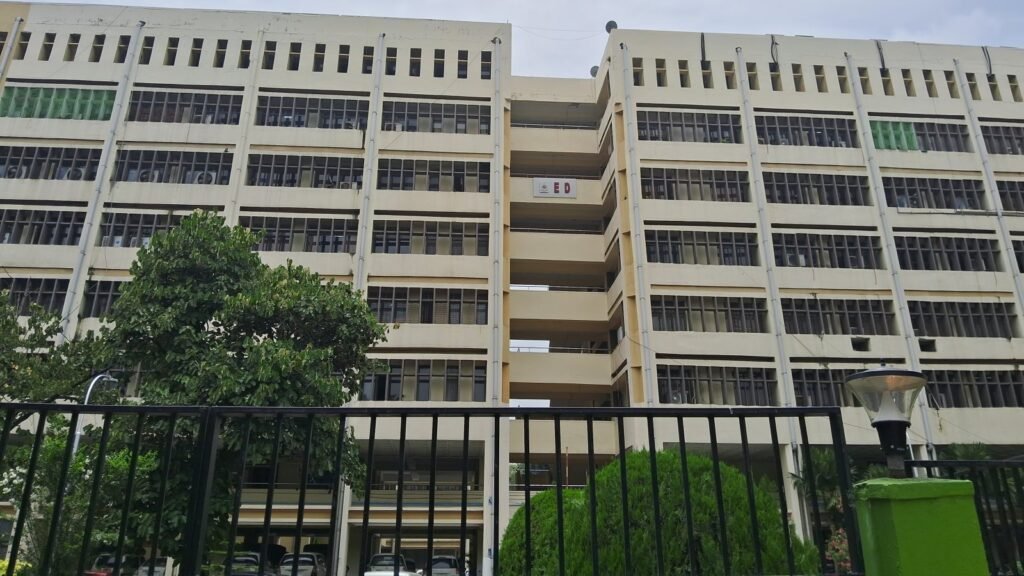
India’s Enforcement Directorate (ED), the country’s financial crimes agency, searched premises linked to the crypto exchanges CoinDCX and Delta Exchange India in Bengaluru on Nov. 4 and 5, 2026. The agency alleges the platforms illegally routed customer trades abroad using the stablecoin USDT. Both companies deny wrongdoing.
The essentials
- The ED searched three Bengaluru premises linked to CoinDCX and Delta Exchange India on Nov. 4 and 5, 2026, under the Foreign Exchange Management Act (FEMA), 1999.
- The agency alleges customer rupees were converted into USDT and used to place trades on foreign exchanges, including Binance, KuCoin, Bybit and Gate.io.
- CoinDCX says it complies with all Indian laws, and Delta says its business involves no cross-border transfer of crypto. Both say trading and withdrawals continue normally.
The searches were carried out under the Foreign Exchange Management Act (FEMA), 1999, which governs how money moves in and out of India. No arrests, asset seizures or account freezes have been announced, and the allegations have not been tested before any authority. The ED described its case in a post on X on Nov. 6.
The case matters for millions of Indian crypto users. CoinDCX is one of India’s biggest exchanges, and the ED’s claims go to the heart of how local platforms offer global crypto prices and products to Indian customers.
What the ED alleges
The ED named the companies behind the two platforms: Neblio Technologies, which runs CoinDCX, and Excelium Technologies, which runs Delta Exchange India. Its allegations, as reported by CoinDesk and ThePrint, fall into four parts.
First, the agency alleges that for spot trades, CoinDCX converted customers’ rupees into USDT, a dollar-pegged stablecoin, and sent it to Binance, KuCoin and Gate.io to fill orders. The overseas accounts were allegedly held in the name of a group company in Costa Rica, which the ED described as a “paper” entity. An ED officer told ThePrint the trades were in fact being placed directly from CoinDCX.
Second, the ED alleges that CoinDCX copied customers’ futures and options positions one for one on foreign exchanges, including Bybit, through the same Costa Rica entity, with positions closed and settled abroad.
Third, it alleges that the “tokenised” US stocks offered to Indian users, such as Apple, Google and Tesla, were in reality derivatives placed on Hyperliquid, a foreign decentralised trading platform. The ED said these products appear to break India’s securities, SEBI and RBI laws, among others, CoinDesk reported.
Fourth, the ED says a large part of Delta’s derivatives and tokenised stock trades was routed through CoinDCX and executed overseas. It also alleges that Delta sent large sums to overseas associate companies, which it is still examining.
The agency puts the cross-border trades at several thousand crore rupees, according to ThePrint; one crore is 10 million rupees, and 1,000 crore is about $105 million. It also alleges that CoinDCX paid hundreds of crores of rupees in fees, in stablecoins, to foreign platforms. The ED has not published exact totals.
What CoinDCX and Delta Exchange say
CoinDCX said on X that ED officials visited its Bengaluru office on Nov. 4 as part of a “routine inquiry” and that it cooperated fully. “We operate in strict compliance with all applicable Indian laws, including FEMA (1999),” the company said, adding that trading, deposits and withdrawals remain fully operational.
Delta Exchange India acknowledged the ED’s visit on Nov. 4 and 5 and said its business “does not involve any cross-border transfer of VDAs in any form or manner”, using India’s legal term for virtual digital assets. Delta told ThePrint it has been registered with the Financial Intelligence Unit-India as a reporting entity since 2023, runs a rupee-settled exchange for Indian users only, and that “user funds remain secure in Indian banks”.
What it means for users
For now, nothing changes for customers of either exchange. Both say deposits, trading and withdrawals are working, and no source has reported a freeze on user accounts, crypto.news noted.
The bigger question is what the case means for products that give Indian users access to global prices, such as perpetual futures and tokenised US stocks. If the ED’s view holds, exchanges may have to change how those products work or stop offering them. CoinDCX has faced pressure before: it was among the exchanges hit by hackers in recent years, as our look at crypto exchange hacks explains.
What happens next?
The ED says its investigation is continuing. Under FEMA, breaches are civil offences that can lead to penalties after an adjudication process, rather than criminal charges. Nowbrief will update this story if the agency files a complaint or either company adds to its statement. For more on the rules, see our crypto regulation coverage.
Sources
- CoinDesk: India’s ED raids CoinDCX and Delta over alleged illegal cross-border trades (Nov. 12, 2026)
- ThePrint: ED raids at 2 Bengaluru crypto platforms reveal Costa Rica shell entity, overseas trades worth crores (Nov. 7, 2026)
- crypto.news: Why did the ED raid CoinDCX and Delta Exchange? What users should know (Nov. 8, 2026)
Related, Nov. 13, 2026: Visa partners can now settle in Western Union USDPT. See the announcement explained.
Another country, another rulebook: Russia let ordinary investors buy Bitcoin, Ether and USDT from Nov. 17, with a 300,000-ruble yearly cap. Read the limits.