
Key points
- The New Zealand election result is still not final: preliminary counts give the National, ACT and NZ First coalition 67 seats in a 131-seat House, one above the 66 needed.
- About 399,000 special votes, roughly one in seven cast, are still to be counted, and they have historically leaned left.
- Official results are due on Nov. 27, and the writ is due back on Dec. 3.
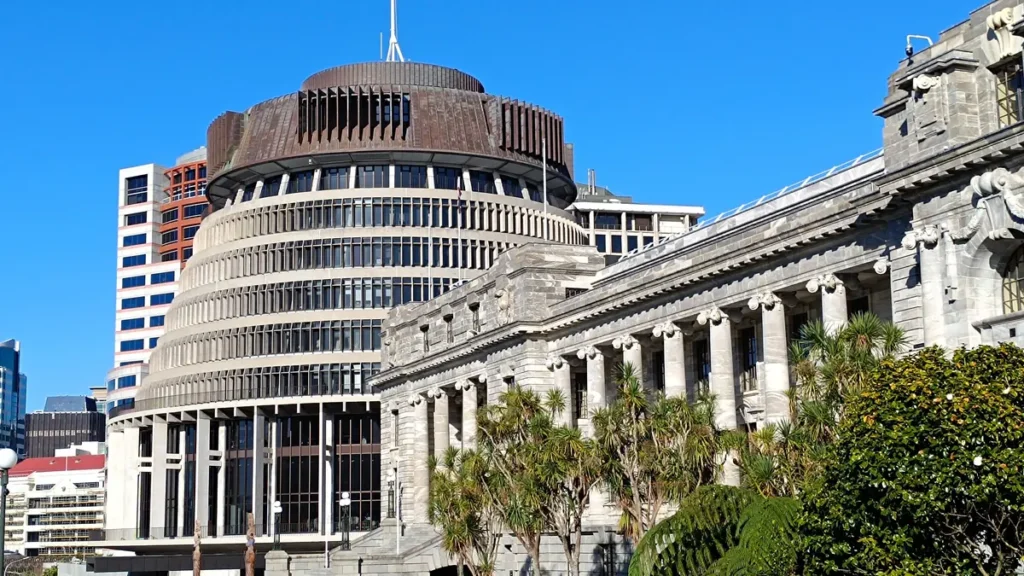
New Zealand voted on Nov. 7 and still does not know who will govern. The New Zealand election result turns on two things the public count cannot settle: special votes, and a record overhang that gave Parliament 11 more MPs than voters chose.
New Zealand election result: how 131 MPs got into a 120-seat House
An overhang happens when a party wins more electorate seats than its share of the party vote earns. RNZ’s analysis counts a record 11. National took 42 electorates against a party vote worth 35 seats, so seven of its MPs are overhang. Te Pāti Māori won five electorates on a vote worth one seat, adding four more.
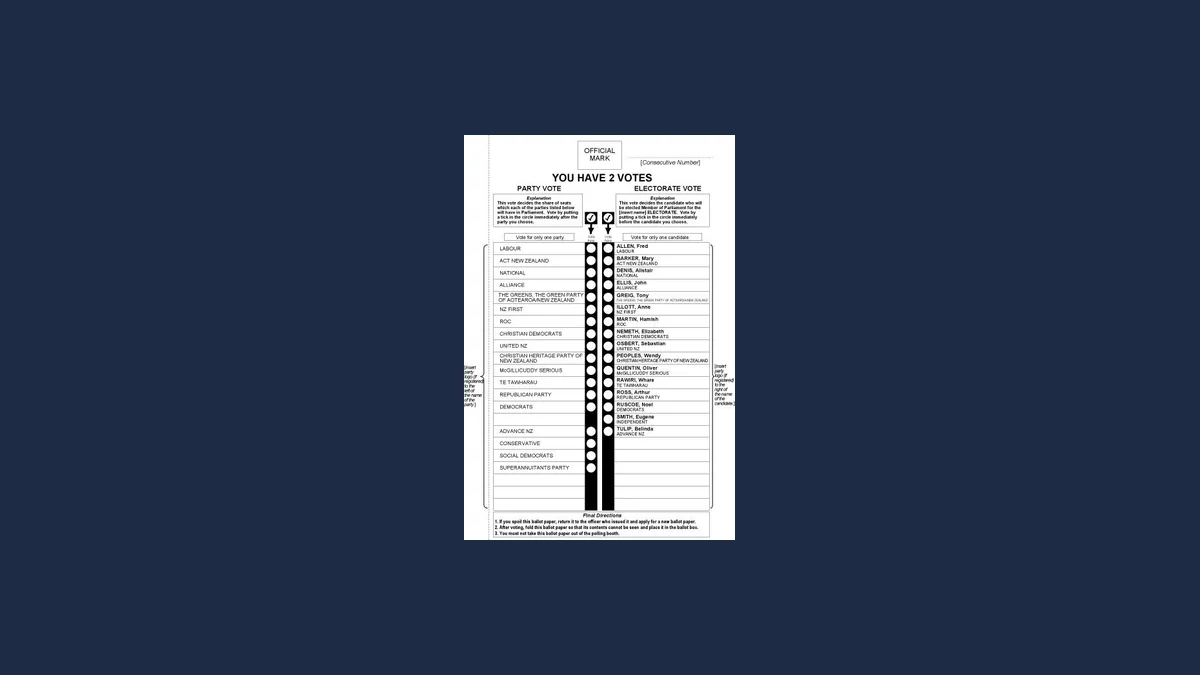
Labour won slightly more party votes than National, 710,330 to 706,680 in Wikipedia’s preliminary tally, yet National holds six more seats.
On the preliminary count, National, ACT and NZ First hold 67 of 131 seats. Labour, the Greens, Te Pāti Māori and Opportunity hold 64 between them. On a strictly proportional basis, RNZ notes, the House would sit deadlocked at 60 seats each.
Five seats that could move the math
RNZ lists the closest races. In Wairarapa, National’s Mike Butterick leads Labour’s Kieran McAnulty by 139 votes. In Mt Roskill, Labour’s Michael Wood leads National’s Carlos Cheung by 262. In Te Tai Tokerau, Te Pāti Māori’s Aperahama Edwards leads the Greens’ Hūhana Lyndon by 436. Hamilton East and Hutt South complete the list.
If National lost Wairarapa, the coalition would fall to 66 of 130, still a majority. A second loss in Hamilton East would put it at 65 of 129.
Why special votes could change the New Zealand election result
Special votes include people who voted outside their home electorate and those enrolled late. They have historically leaned left. About 399,000 of the 2,832,000 votes cast are in that pile. If ACT or NZ First lose list seats to the left, nothing protects them, because neither has an overhang. One lost seat leaves the coalition at 66, and two leave it at 65, at which point Opportunity, with seven seats, could become kingmaker.
RNZ stresses that this is a scenario, not a prediction.
Opportunity, a new party, took 5.96% of the party vote and seven seats in the preliminary count. Wikipedia’s election page lists it alongside National, Labour, the Greens, ACT, NZ First and Te Pāti Māori in the seven-party House. Coverage cited by search results says ACT leader David Seymour urged Luxon to phone Opportunity leader Qiulae Wong, a call that had earlier been ruled out.
Christopher Luxon described the vote as “too close to call” after election night, and said the government would run under caretaker conventions until official results are released.
What Luxon has said and the dates to keep
The count is also not the first close finish this month: Mary Peltola won the Alaska Senate seat after a lawsuit fight over certification. Official results are due on Nov. 27, according to the Electoral Commission. The writ is due to be returned on Dec. 3, subject to judicial recounts.
Until the special votes are in, treat any claim of victory as premature.