

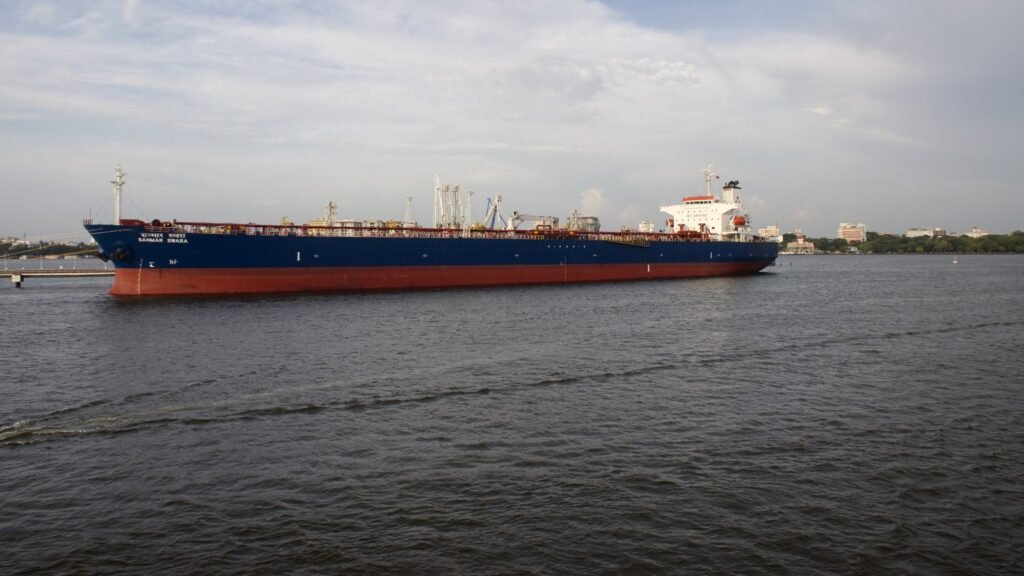
Oil prices held near $93 a barrel on Monday, Nov. 23, 2026, as continued reports of attacks on tankers in the Strait of Hormuz met growing forecasts that the market will soon be oversupplied. Brent crude traded at $92.65 and US benchmark West Texas Intermediate at $83.55, up about 0.1% and 0.2% on the day, ABC News reported. The standoff in the Gulf is one we have followed since Iran’s claim about mines in the strait on Nov. 15.
The essentials
- Brent crude traded at $92.65 a barrel and WTI at $83.55 on Monday, ABC News reported, with Brent down about 4% on the week.
- Oilprice.com wrote on Nov. 17 that tanker attacks in Hormuz and a rebound in Gulf exports were cancelling each other out, leaving prices “somewhat directionless.”
- The International Energy Agency says falling demand has been “more serious than the supply squeeze,” and expects a glut this quarter and next year, according to Oilprice.com.
Where are oil prices now?
Brent has been moving in a narrow band. Oilprice.com put it at $91.70 early on Nov. 17 and at $93 later that day. On Friday, Nov. 20, Brent rose 0.6%, but it was still down 4% for the week, ABC reported. Oil barely moved on Monday, while spot gold rose 2.2% and bitcoin gained 0.5% in the same ABC snapshot.
| Benchmark | Price per barrel | Change on the day |
|---|---|---|
| Brent crude | $92.65 | +0.1% |
| West Texas Intermediate | $83.55 | +0.2% |
What is happening in the Strait of Hormuz?
The strait is the narrow route for oil from Gulf producers, and traffic through it remains much lower than before the war, according to data from the shipping tracker Windward cited by Oilprice.com. Oilprice.com’s Irina Slav wrote on Nov. 17 that Iran has been reporting “nearly daily incidents” with tankers hitting naval mines in corridors Tehran calls unauthorized. Those claims come from Iran and have not been independently verified.
The Islamic Revolutionary Guard Corps Navy has also warned ship owners that the US-backed southern passage through the strait is mined, and that cooperating with US officials “would put their vessels at risk,” Oilprice.com reported. Another Oilprice.com writer, Tom Kool, described the pace of tanker attacks as unprecedented, though that is the writer’s own wording and no source was named. The tension is also visible elsewhere in the Gulf, where Iran has hit targets in Bahrain, as we reported in our story on the Bahrain radar strike.
Why are attacks not pushing prices higher?
Because traders are weighing them against signs of too much supply. Oilprice.com said prices extended a decline that began earlier in November as the market focused on a rebound in Middle Eastern exports. Tim Waterer, chief market analyst at KCM Trade, told Reuters that oil was recalibrating lower as supply catches up with demand.
The International Energy Agency and two investment banks expect supply to exceed demand, Oilprice.com reported. The agency said demand destruction, meaning buyers cutting back because of high prices, has been more serious than the supply squeeze. China shows the effect. Its October refinery throughput fell 2% from September and 8% from a year earlier to 13.79 million barrels a day, and implied crude stocks grew by 492,000 barrels a day, the largest build since March, according to Energy Intelligence data cited by Oilprice.com.
What else is moving supply?
Several smaller changes are adding barrels or adding doubt: – Iraq has restarted the 120,000 barrel-a-day Kirkuk to Fishkhabour pipeline and wants to send 500,000 barrels a day to Turkey to rely less on Hormuz, Reuters reported on Nov. 17. – OPEC has begun an audit of its members’ production capacity, which is intended to produce more realistic quotas from 2027, Reuters reported on Nov. 16. – Houthi attacks on Saudi energy infrastructure were also reported by Oilprice.com, without dates.
What are traders watching next?
Kool wrote that Washington’s next move toward Tehran could either send oil into triple digits or trigger another fall, which is his view and not a forecast we can verify. Beyond that, watch three things: whether tanker incidents become more frequent, whether Gulf exports keep recovering, and whether weaker stocks spill into demand forecasts. For other markets hit by the same week, see our gold price page and our commodities section.
Oil prices move quickly. Monday figures are snapshots and the Oilprice.com figures date from Nov. 17. Check a live tracker before acting. This article is for information only and is not investment advice.