
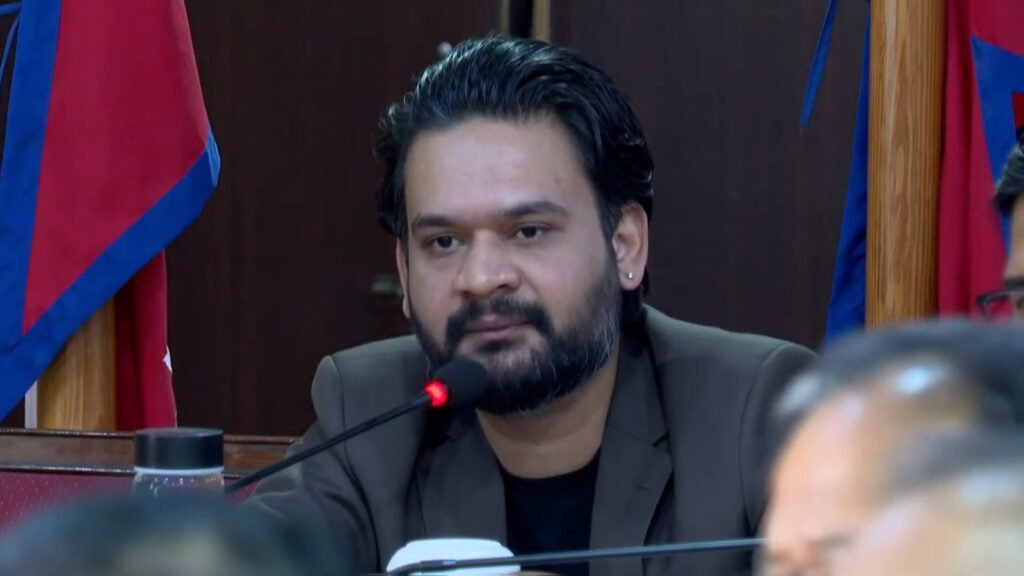
Prime Minister Narendra Modi announced a development package of 24,000 crore Nepalese rupees, about Rs 15,000 crore, for Nepal on Monday, Nov. 23, 2026, during talks in New Delhi with Nepal’s Prime Minister Balendra Shah, known as Balen Shah, PTI reported. The figure is roughly $1.6 billion, by one outlet’s conversion. India and Nepal also signed eight memorandums of understanding, and the two leaders launched a cross-border train. The visit comes after relations cooled in May, when Shah called for China and the United Kingdom to help settle the long-running border dispute. Fuel supply featured in the talks, and our report on the Hormuz tanker attacks covers the shipping risks behind this year’s oil disruption.
The essentials
- Modi announced a package of 24,000 crore Nepalese rupees, about Rs 15,000 crore, for what he called Nepal’s reconstruction and long-term development, PTI reported on Nov. 23, 2026.
- The two sides signed eight memorandums of understanding, including on health, space research, urban development, Ayurveda and civil service training, PGurus reported.
- Coverage read so far gives no project list or timeline for the package and no outcome on the border dispute.
What did India announce for Nepal?
India announced a development cooperation package of 24,000 crore Nepalese rupees, which is about Rs 15,000 crore in Indian currency. Modi said it was meant to give “renewed strength to Nepal’s reconstruction and long-term development,” according to PTI. He also offered condolences for lives lost in Nepal’s floods in August. PGurus linked the money to recovery from those floods.
No breakdown has been published in the reports we could verify. They do not say which projects the money will fund, how it will be split between grants and loans, or over what period it will be spent. We will update this story if the Ministry of External Affairs or Nepal’s foreign ministry releases a fuller list.
The leaders also virtually laid the foundation stones of several India-assisted projects in Nepal, PTI reported. The projects were not named.
Which eight agreements were signed?
India and Nepal signed eight memorandums of understanding, or MoUs, which are written agreements to cooperate that are not the same as binding treaties. PGurus named five areas: civil service capacity building, space research, healthcare and medicine, urban development, and Ayurveda and traditional medicine. Its report says the list is partial, and three of the eight were not named. PTI described the agreements more broadly as covering areas “including health and education.”
The sides also discussed cross-border infrastructure and railway links. The most visible result was a rail service between Ayodhya in Uttar Pradesh and Janakpur Dham in Nepal, which the leaders flagged off virtually from Hyderabad House in Delhi. The train is called the Saryu-Kamla Express. Reports we could verify give no schedule or frequency.
What did Modi and Shah say?
Modi described the relationship as one of “kinship and unbreakable trust,” PTI reported, and said the two countries are “partners in each other’s progress.” He placed the talks under India’s Neighbourhood First policy, which sets out how New Delhi deals with nearby countries.
Modi also made a point about fuel. India has been “a reliable supplier of petroleum products and other essential goods to Nepal for years,” he said, and “despite serious challenges related to oil supply this year, we have maintained the supply of fuel, fertilisers and other essential goods.” Nepal is landlocked, so supply routes through India matter to its economy. Our commodities coverage tracks the oil market.
Shah said ties “stand as firm as the Himalayas and as vast as the oceans.” He called India “a dependable and trusted neighbour” that has been “the first responder” when disasters hit Nepal, and said he was confident the outcomes would “elevate Nepal-India ties to new heights.” He invited Modi to visit Nepal, though no date was given, PGurus reported.
Why does the visit matter?
This is Shah’s first bilateral foreign visit since he took office in March 2026, PGurus reported, so Delhi is his first stop. Shah landed in Delhi on Sunday for a two-day trip, according to PTI.
The talks were closely watched because of the strain in May. PTI said ties came under pressure after Shah’s remarks seeking the involvement of China and the United Kingdom in the border dispute. That is a sensitive subject for Delhi, which has traditionally treated border questions with Nepal as a bilateral matter.
What is still unclear?
Several things were not reported in the coverage we could confirm:
- **Border:** no statement on the border dispute or any process to resolve it.
- **Package detail:** no list of projects, no timeline and no split between grants and loans.
- **Trade and energy:** no specific trade or hydropower measures were reported.
- **The eight MoUs:** only five areas were named.
- **Modi’s visit:** Shah’s invitation has no date.
Readers who want the official wording should check the Ministry of External Affairs readout when it appears. Nepal’s government has not, in the reports we reviewed, said how it will spend the funds.
This story is based on PTI via The Tribune and a PGurus report from Nov. 23, 2026. NDTV’s original report could not be opened, and the Rs 15,000 crore figure, eight agreements and Saryu-Kamla Express are reported consistently across the outlets we read. We will update it as official texts are released.