

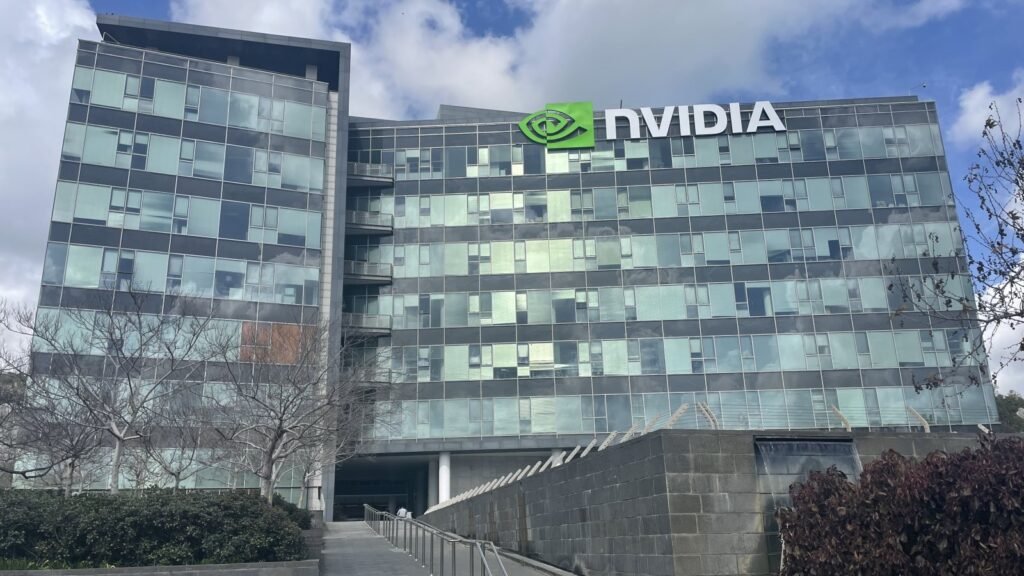
Jensen Huang’s sudden exit as Nvidia chief executive has rattled Israel, home to the chipmaker’s biggest research operation outside the US. But some Israeli venture investors say the turmoil could give smaller AI chip companies a rare opening, TechCrunch reported on Nov. 13, 2026.
The essentials
- Nvidia employs about 6,000 people in Israel, roughly double the number in October 2023, according to the Israeli business daily Globes.
- Operations run from Israel accounted for 18% of Nvidia’s revenue, or $17.5 billion, in the second quarter, Globes reported.
- Israeli investors told TechCrunch that slower decision-making at Nvidia after Huang’s Nov. 12 resignation could help challengers win customers.
The question matters well beyond Israel. Nvidia makes most of the chips used to train and run AI models, and any loss of pace at the company could change who supplies the next wave of AI data centres. Huang resigned on Nov. 12, and chief financial officer Colette Kress is interim CEO.
Why does Nvidia matter so much to Israel?
Nvidia is one of Israel’s largest technology employers, and its growth has lifted the whole economy. The company agreed in March 2019 to buy the Israeli-founded network chipmaker Mellanox for $6.9 billion, or $125 a share in cash, and completed the deal in 2020. Mellanox’s base in Yokneam, in northern Israel, became Nvidia’s main Israeli site.
Since then, the Israeli operation has grown from a small lab into a hub of about 6,000 engineers, Globes reported. It said work managed from Israel produced $17.5 billion in second-quarter sales, more than four times the quarterly revenue of the drugmaker Teva. In September, Bloomberg reported that the “Nvidia effect” had allowed Israel to raise its growth forecasts.
Nvidia is also planning a large new campus in Kiryat Tivon, in the north. Israel’s land authority offered a 90-dunam (22-acre) plot in 2025, and the site was expected to cover about 160,000 square metres, The Times of Israel reported. Globes said it could eventually house up to 10,000 new employees.
What are Israeli investors saying?
The mood is mixed. Huang drove Nvidia’s expansion in Israel and once called the country the company’s “second home”. Pavel Gurvich, an Israeli cybersecurity entrepreneur, told TechCrunch there is “a strong positive sentiment towards Nvidia and Jensen in Israel’s tech community.”
Investors are also looking at the competitive picture. Yanai Oron, a general partner at Vertex Ventures Israel, told TechCrunch that slower decisions at Nvidia could give competitors an opening. Adi Levanon, founder and managing partner of Selah Ventures, said challengers “now have a window” to show their approach delivers better economics, but added that “a leadership change alone won’t win them the business.”
Could Nvidia’s rivals really gain ground?
Possibly, but only at the edges for now. Nvidia’s technology, software and customer relationships remain in place, and Levanon said Huang’s departure does not dismantle them. Start-ups building alternative AI chips, such as Britain’s Fractile, which raised $720 million this week, are betting that buyers want cheaper ways to run AI models.
Oron also warned of a catch. If the uncertainty makes companies slow their AI spending, challengers could end up with “a bigger share of a smaller opportunity,” he told TechCrunch.
What happens next for Nvidia in Israel?
Much depends on who becomes Nvidia’s permanent chief executive. Israeli media have noted that Kress has close ties to the country: in a 2023 interview with Globes, she said she usually began her working day with Israel meetings. Michael Kagan, Mellanox’s former technology chief and now Nvidia’s chief technology officer, has been mentioned as a possible successor, though TechCrunch said he is not at the top of the list.
The next test comes on Nov. 17, when Nvidia reports quarterly results. For the market reaction so far, read our story on how Nvidia stock plunged 11% after Huang resigned.
Sources
- TechCrunch: Israel’s VCs see opportunity for challengers in Nvidia’s turmoil (Nov. 13, 2026)
- Globes: Nvidia CEO’s plight sends shock waves across Israel (Nov. 12, 2026)
- The Times of Israel: Israel proposes Kiryat Tivon for Nvidia’s tech campus (Nov. 19, 2025)
- TechCrunch: Nvidia to buy Mellanox for $6.9B (March 11, 2019)
- Bloomberg: “Nvidia effect” enables Israel to upgrade growth forecasts (Sept. 10, 2026)
- TechCrunch: With $720M round, Britain’s Fractile gets a leg up in the race for AI chips (Nov. 11, 2026)