
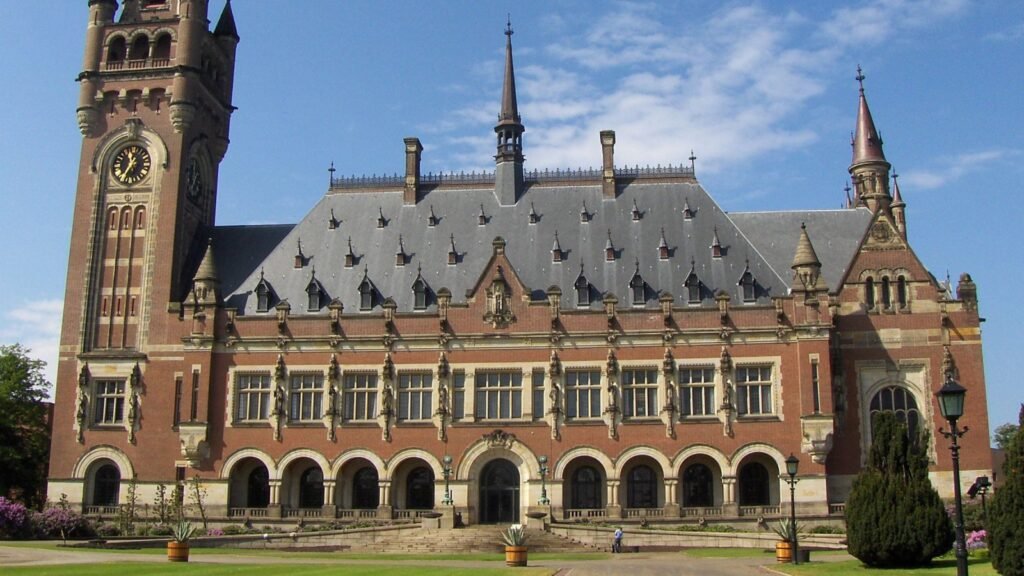
The International Court of Justice ruled on Thursday, Nov. 19, 2026, that Myanmar committed genocide against the Rohingya during its 2017 military crackdown in northern Rakhine state. It is the first time the UN’s top court has found a state responsible for genocide, as it also handles genocide claims linked to Gaza and the war in Ukraine.
The essentials
- The court ruled 9-6 that Myanmar “has committed genocide against the Rohingya group in northern Rakhine state”, ICJ President Yuji Iwasawa said.
- The judges found that Myanmar’s security forces killed about 10,000 Rohingya and acted with “genocidal intent”.
- Myanmar must make reparations, including helping Rohingya refugees return safely and replacing destroyed property, the court said.
What did the court decide?
The court found that Myanmar broke the 1948 Genocide Convention. Reading the judgment in The Hague, Iwasawa said the court, by nine votes to six, found Myanmar “has committed genocide against the Rohingya group in northern Rakhine state, in violation of its obligations under the Genocide Convention”, Al Jazeera reported.
The court also found that Myanmar violated its duty to prevent genocide, because it should have known of the risk when armed civilians joined the military campaign, according to Al Jazeera. The reading lasted about three hours.
What did the judges find happened in 2017?
The court said Myanmar’s security forces “killed thousands of Rohingya civilians, perpetrated widespread acts of sexual violence as well as acts of extreme violence against children and attacked fleeing Rohingya” as they fled to Bangladesh, Reuters reported.
The judges estimated that about 815,000 Rohingya lived in northern Rakhine before the operation and that around 10,000 were violently killed, NPR reported. Iwasawa said the violence went “well beyond what would be required to punish the population” and was “characteristic of an intent to destroy a substantial part of the group.”
Genocide is hard to prove because the Convention requires a specific intent to destroy a group “in whole or in part”. The court said the “only reasonable inference” from the evidence was that Myanmar’s forces had that intent. It rejected Myanmar’s argument that the campaign was a legitimate response to attacks by the Arakan Rohingya Salvation Army (ARSA), an armed group.
What must Myanmar do now?
Myanmar must provide reparations and restitution, Iwasawa said, according to Al Jazeera. The court said restitution should include:
- helping Rohingya return home safely and voluntarily;
- returning or replacing collective property that was destroyed;
- helping search for the missing and ensuring proper burials;
- physical and psychological rehabilitation for survivors;
- protecting the Rohingya from further persecution.
The ruling is final and binding, but the court cannot enforce it. If Myanmar does not comply, the case can be reported to the UN Security Council, the Associated Press reported.
How have people reacted?
“This is a great day for the Rohingya,” said Yasmin Ullah, a Rohingya rights activist who attended the reading in court, the AP reported. Amnesty International said it hoped the ruling “marks the beginning of a long overdue process of accountability in Myanmar”.
Myanmar, represented in court by Union Minister Ko Ko Hlaing, has always denied genocide. It had not given a public response to the ruling in the reports Nowbrief reviewed when this story was published.
Why does the ruling matter?
The Gambia, backed by the 57-member Organisation of Islamic Cooperation, brought the case in 2019. The 2017 crackdown drove more than 730,000 Rohingya into Bangladesh, and about 1.2 million now live in camps around Cox’s Bazar.
In its only earlier genocide judgment against a state, in 2007, the court found that Serbia had failed to prevent the 1995 Srebrenica genocide but had not committed it. Legal experts expect Thursday’s reasoning on intent to shape other cases, including South Africa’s case against Israel over Gaza, which Israel rejects.
The ICJ’s own judgment summary was not accessible to Nowbrief when this story was published; quotes are as reported by Al Jazeera, NPR, Reuters and the Associated Press.
Sources
- UN’s top court finds Myanmar guilty of genocide against Rohingya (Al Jazeera, Nov. 19, 2026)
- Top U.N. court rules Myanmar committed genocide against the Rohingya (NPR, Nov. 19, 2026)
- World Court finds Myanmar forces killed thousands of Rohingya (Reuters via Yahoo News, Nov. 19, 2026)
- ICJ finds Myanmar guilty of genocide against Rohingya (AP via The Wire, Nov. 19, 2026)
- The Gambia v. Myanmar case page (International Court of Justice)
Related: Ebola outbreak now second-largest on record, CDC says: 11,021 cases
Related: Canary Islands migrants: 1,488 rescued in one day, most since 2020