
Key points
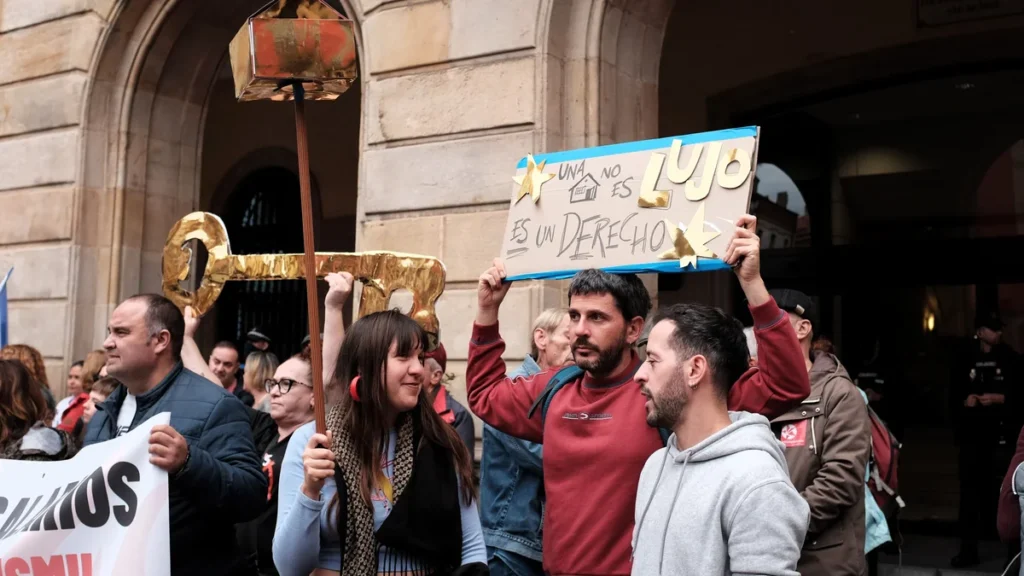
- The Nov. 11, 2026 Spain general strike was the country’s first in 14 years, a 24-hour walkout over housing costs and low wages with the slogan “Wages, housing and prices.”
- Organizers and authorities provided wildly discrepant estimates of turnout numbers, such as more than 500,000 in Madrid according to the Tenants’ Union versus 120,000 according to the office of central government there.
- Over 70 arrests were made and 1,500 incidents recorded by police, while the strike occurred just under three weeks before a snap election on Nov. 29.
Table of Contents
The first Spanish general strike in 14 years took place on Wednesday, Nov. 11, 2026, with trade unions and tenants striking over rent and salary issues, Euronews reported.
More world news coverage is available on our world news section page, such as the Ukraine peace talks in Abu Dhabi.
Who called the Spain general strike
The 24-hour Spain general strike kicked off from midnight on Wednesday. The two largest unions in Spain – Comisiones Obreras (CCOO) and General Union of Workers (UGT) – were involved. Additionally, the strike was supported by the smaller CGT and CNT unions, among others.
The Spain general strike is considered to be the first big action organized by the unions since 2012, during which the conservative Mariano Rajoy served as prime minister. According to Euronews, it is the eighth general strike in Spain since the return of democracy in the late 1970s.
The key issue is the problem of housing, according to Euronews. During the last decade, rents have risen by about 80%, but salaries did not increase accordingly. Young people are especially affected.
Valeria Racu, who represents the Tenants’ Union, targeted her criticism at every level of governance. “This is a strike against rentierism, against landlords, against employers and against all governments,” she said. She named the central government as one of the targets.
Counting the crowds
There is no consensus on the number of protesters. In Madrid, the Tenants Union estimated that there were more than half a million. The central government’s representative office in Madrid estimated that there were 120,000.
In Barcelona, there was an estimate of 400,000 by organizers and 55,000 by Barcelona police. In Bilbao, the local police reported 50,000 people.
Such discrepancies are fairly normal in the reporting of protests because the counts are always going to differ between the two sides.
Strike reports from workplaces and police
According to the unions, there was 90% participation in the ports (Valencia and Algeciras), and in the car manufacturing industry. They reported full stoppages at Volkswagen’s plant in Navarre and at Seat. In addition, they gave 85% for the meat industry and 82% for waste collection.
One independent marker pointed the same way. According to Euronews, industrial electricity demand fell 25.6%. Employers still called the strike a failure.
The Madrid metro operated in a minimum service mode and had 21% fewer passengers at 7:00 am.
There was high tension in Madrid and Barcelona. The riot police charged at the protesters who were wearing masks and throwing fireworks and flares at the officers. Over 70 people have been arrested in Spain, and police recorded 1,500 incidents.
Earlier in Madrid, the unions had reported at least eight people injured when police charged pickets outside Madrid’s bus depots. The general secretary of UGT, Pepe Álvarez, said on X that police had obstructed the constitutional right of picketing at Mercamadrid, the city’s main wholesale food market.
The political stakes
The strike takes place several weeks after Prime Minister Pedro Sánchez called early elections for Nov. 29, after parliament defeated his government’s housing decrees, as reported by Euronews.
Leader of the opposition Partido Popular, Alberto Núñez Feijóo, said that the trade unions might have committed a “historic mistake.” Álvarez responded that whoever will rule “will have to listen to the people.”
By Racu’s comments, it can be seen that the Spain general strike was not directed against any party. Both the government and the Partido Popular were mentioned in her speech.
Future actions are not clear yet. In the sources available for review, the unions did not announce the next strike date. The issue for the campaign is whether the theme of the strike, which is housing, will influence voting on Nov. 29.
Related, Nov. 16, 2026: Spain’s rescue service picked up 1,488 people off the Canary Islands in one day. See our report.