
This was meant to be a showcase week for artificial intelligence, and it ended with the Nasdaq Composite down 5.3% on Friday, Nov. 20, 2026, wiping out its gain for the year. Our reading is that investors are no longer asking whether people want AI. They are asking who pays for it, who allows it and whether it can be trusted, a debate that began when the S&P 500 had its worst week since 2025 two weeks ago.
The essentials
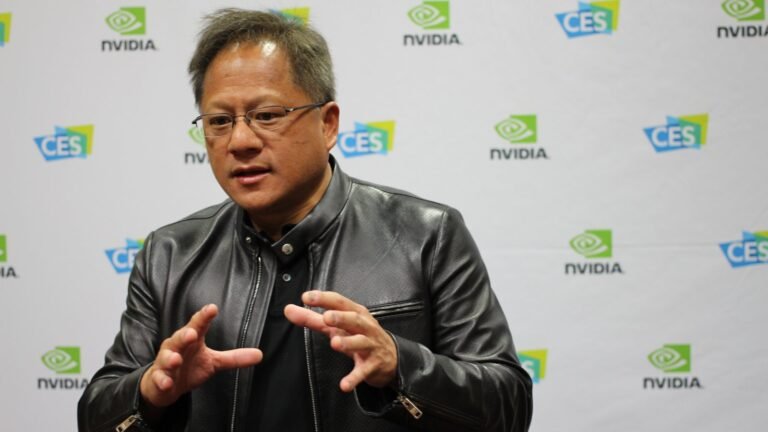
- Nvidia’s first results since Jensen Huang’s exit showed revenue more than doubling and Anthropic ran the biggest IPO ever, yet both stocks fell, and chip stocks had their worst week since 2001, Yahoo Finance reported.
- Tech companies that beat earnings forecasts this season fell an average of 1.5% on their report day, the worst reaction to good news since at least 2001, according to Bespoke Investment Group.
- Our view: financing costs, politics and legal risk explain the fall better than weak demand, and the damage so far is concentrated in AI stocks and not spread across the whole market.
What happened to the AI trade this week?
The S&P 500 fell every day this week, with four drops of 1% or more, and dropped 3.7% on Friday, losing about $2.4 trillion in value and closing 10% below its Oct. 6 record, Yahoo Finance reported. That kind of week has happened only five other times since World War II, including in 2001 and 2008, according to Bespoke.
| Measure | Result | Context |
|---|---|---|
| S&P 500 | Down 3.7% to 6,910.39 | Correction, 10% below Oct. 6 record |
| Nasdaq Composite | Down 5.28% to 22,617.73 | 2026 gain erased |
| Dow Jones | Down 1.93% to 48,147.33 | Also in a correction |
| Chip index (week) | Down about 17% | Worst week since 2001 |
| Nvidia | About $2.7 trillion lost since Oct. 6 | Larger than the $2.5 trillion that The Kobeissi Letter called the biggest 45-day loss for a stock |
| Volatility index | Up 26% to 35.89 | Fear gauge |
Bitcoin fell to a two-year low near $55,500 in the same rout, and gold fell too.
Why did good news not lift the stocks?
The news itself was not bad. Nvidia reported record revenue on Nov. 17, and Anthropic priced its IPO at $83, above the $70 to $78 range we had reported, and closed its first day at $97.17. Selling 825 million shares at $83 raises about $68.5 billion before costs, on our arithmetic. Both stocks still fell by Friday.
Three pressures sit behind the price action, and none of them is demand.
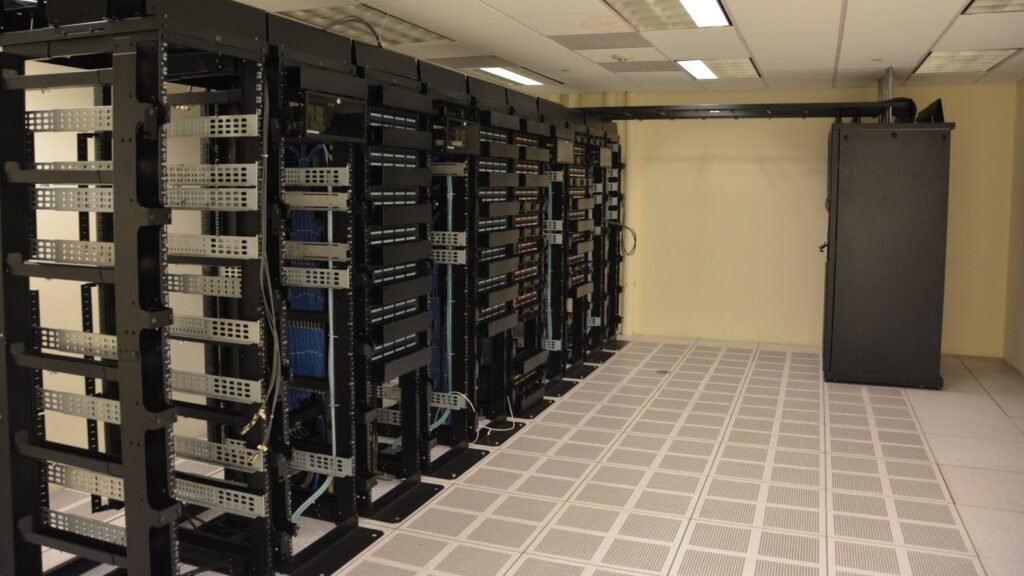
**Money is expensive.** AI companies borrow heavily to build data centers, and borrowing has become costly. The 10-year US Treasury yield is close to 5%, and traders expect further rate rises, a theme in our report on gold’s fall this week. When money costs more, a business that spends years building before it earns is worth less today.
**Politics is turning.** In early November, AI shares fell after Democratic gains in the midterms raised the chance of slower data-center building, the Associated Press reported. Voters across parties are wary of AI and dislike the higher power bills data centers can cause. A moratorium on new data centers would hit the companies that sell chips to build them.
**Legal risk is rising.** The SEC has opened a civil probe into whether Nvidia misled investors, The Wall Street Journal reported, though neither side has confirmed it. On Nov. 12, four nonprofits led by Public Citizen asked a San Francisco court to order a freeze on the most advanced AI development at Anthropic, Google, Meta, OpenAI and a firm named in the filing as SpaceXSI, in a case we covered in our report on the lawsuit. The groups’ claims have not been tested in court, and an order of that kind would be extraordinary. But the filing shows the risk is now written down.
What do the week’s other tech stories show?
They suggest the limits are practical as well as financial.
- **Regulators are acting.** Italy fined Meta €805 million and gave it 60 days to change how it asks for photo access, a deadline that falls in mid-January 2027, according to our report. California’s DMV ordered Waymo off state freeways, and Waymo then paused freeway rides across the US.
- **Trust is fragile.** Hackers took the data of 149,346 people from Uber through a vendor, Fireworks AI, by using the vendor’s own credentials, so no alert fired. As AI agents handle money, as with ChatGPT Wallet, which asks for Face ID on every purchase, that kind of failure matters more.
- **Jobs are shifting.** Salesforce began another round of layoffs three months after the last, without saying how many roles are affected.
Is this 2000 or 2008 again?
The comparison is tempting, and the data only partly supports it. In October and November 2008 the typical S&P 500 stock lost about 28%. This time the equal-weight S&P 500, which gives every company the same weight, is about flat since Sept. 30, Yahoo Finance noted. Walmart and Costco rose on Friday, and a Goldman Sachs version of the index that leaves out AI stocks is only about 5% below its record, according to Jim Bianco.
Matt Orton of Raymond James said the fundamentals differ sharply from 2000 and the market is healthy. Others are more careful. BTIG’s Jonathan Krinsky noted that about half of S&P 500 stocks were still above their 50-day average, which he said made it unusual to call a final low. History is mixed: a year after the other five weeks like this one, the S&P 500 was higher four times, but after October 2008 it fell about 25% more before bottoming in March 2009.
Our reading is that this is a concentrated unwind. A small group of AI and chip stocks grew to dominate the index, so their fall drags everything, while most of the market has held up. That is less dangerous than a broad collapse, but it matters more for anyone whose savings are in an index fund, because the index now leans on the same few names.
What does the Anthropic lock-up mean?
One detail worth watching is how many Anthropic shares can be sold. Non-founder employees could sell up to 10% of their holdings on the first trading day, with a further 35% available after the company reports earnings for the current financial year, Forbes India reported. Anthropic also sold $26 billion of shares at the IPO price to AMD, Broadcom, Google, Micron, Microsoft, Nvidia and TSMC, CNBC reported. In our view that ties several chip and cloud firms’ fortunes to a single customer, which is fine when prices rise and uncomfortable when they fall.
What does it mean for ordinary savers?
The practical point is concentration. An index fund that tracks the S&P 500 holds a large slice of its money in a handful of AI and chip companies, so when those fall, the whole fund falls even if most of the companies in it are fine. That is why the index is down 10% while the typical stock is roughly flat since September. Savers who hold only a broad US fund are more exposed to the AI trade than they may think.
For readers in India, the effect so far has been indirect. Indian shares had been rebounding earlier this week, and they will react to Friday’s fall when trading resumes on Monday. Gold, which many Indian households treat as the safe choice, fell with stocks on Friday, a point we make in our opinion piece on gold.
What questions can we not yet answer?
Three things are still open, and we think they decide what happens next.
- **Is demand slowing?** Nvidia’s revenue more than doubled, which says no. But markets price the future, and a company can grow fast and still be worth less if investors expect growth to cost more.
- **Will the financing hold?** Data centers are paid for with borrowed money, and it is expensive. Whether lenders keep lending at today’s rates will matter more than any single earnings report.
- **Will rules actually slow deployment?** A lawsuit, a probe and a fine are warnings, not orders. The test is whether a court or regulator forces a change that costs real money.
What would change this view?
We would be wrong if the selloff turned out to be forced selling. Some of Friday’s fall may have been margin calls rather than a verdict on AI, as the metals market suggested this week. We would also change our mind if rate expectations fell or if the SEC probe came to nothing.
The next dated tests are these: – **Monday, Nov. 23:** US stock markets reopen after the Friday rout. – **December:** the Federal Reserve meeting, where traders expect a rate rise. – **Mid-January 2027:** Meta’s 60-day deadline in Italy. – **Any time:** whether Waymo returns to freeways, and whether the SEC probe is confirmed.
This is an analysis article. The interpretation is Nowbrief’s, and the market figures come from Yahoo Finance and our earlier reports linked above. This article is for information only and is not investment advice.
Sources
- Chips suffer worst week since 2001 as the Nasdaq nears a bear market (Yahoo Finance)
- Bitcoin plunges below $56,000 to two-year low as crypto market sell-off intensifies (Share Talk)
Related: Israel’s investors see an opening for Nvidia rivals after Huang’s exit
Related: SpaceX data center: $24 billion plan on land Brownsville gave up